Showing posts with label EU legislation. Show all posts

July 20, 2025

EU strengthens biosecurity: 26 new alien species added to Union concern list

The European Union has taken a significant step in strengthening its biosecurity by extending the list of invasive alien species (IAS) of Union concern, as mandated by Regulation (EU) No 1143/2014 on the prevention and management of the introduction and spread of invasive alien species. This crucial update adds a substantial number of new species, bringing the total from 88 to 114, marking a critical step in the EU's ongoing battle against biodiversity loss and economic damage caused by non-native organisms. Additionally the species clarifies some important taxonomic issues which will prevent confusion on the identification of a few species, among which the group of kingsnakes (Lampropeltis getula).

Formalized by Commission Implementing Regulation (EU) 2025/1422 of 17 July 2025, this expansion is particularly notable for its inclusion of challenging species across various fronts. It now extends further into marine environments, an area notoriously difficult to manage. Simultaneously, it also lists high-profile species like the American mink (Neogale vison) and the North American beaver (Castor canadensis), despite the significant economic interests characterising the former and the complex management challenges posed by the latter. While such listings trigger strict restrictions on activities like import, sale, breeding, and impose obligations for early detection and rapid eradication, the two years deferral of the mink and beaver's effective listing date demonstrates the Regulation's flexibility in meeting the needs of relevant stakeholders.

American mink (Neogale vison) farm © Photo: Riccardo Scalera

For the majority of species, inclusion on the Union list means immediate enforcement of stringent measures. The newly added species significantly broaden the scope of the EU's IAS management across various taxonomic groups:

Terrestrial plants: this update sees the addition of new plant genera like black wattle (Acacia mearnsii), expanding on existing Acacia species such as golden wreath wattle (Acacia saligna). Other new terrestrial plants include paper mulberry (Broussonetia papyrifera) and cape ivy (Delairea odorata). Critically, a complex of highly invasive knotweeds – Japanese knotweed (Reynoutria japonica), Bohemian knotweed (Reynoutria x bohemica), and giant knotweed (Reynoutria sachalinensis) – are now collectively recognised, joining the previously listed Himalayan knotweed (Koenigia polystachya), underscoring the severe threat posed by this group. These new additions complement a substantial number of other terrestrial invasive plants already listed, including various hogweeds, grasses, and climbing vines.

Terrestrial birds: the list expands its avian representation with new bird species. The crested myna (Acridotheres cristatellus) joins the previously listed common myna (Acridotheres tristis), while the red-whiskered bulbul (Pycnonotus jocosus) adds another bulbul species alongside the red-vented bulbul (Pycnonotus cafer). These new avian invaders enhance the list's coverage of threats posed by other introduced bird populations, which includes species such as the Egyptian goose (Alopochen aegyptiacus) and ruddy duck (Oxyura jamaicensis).

Terrestrial mammals: beyond the deferred American mink and North American beaver, the list now includes the sika deer (Cervus nippon), joining the existing chital (Axis axis) and muntjac deer (Muntiacus reevesi), further addressing the impacts of non-native deer populations. The overall mammalian category on the list is now more comprehensive, covering a diverse array of other mammals, e.g. rodents, carnivores, and ungulates, already established in the Union, among which the coypu (Myocastor coypus) and the raccoon dog (Nyctereutes procyonoides).

Terrestrial invertebrates: this group sees a significant increase in attention. New types of predatory flatworms are added, including the kew worm (Bipalium kewense), and two species of New Guinea flatworm (Obama nungara and Platydemus manokwari), which join the previously listed New Zealand flatworm (Arthurdendyus triangulatus). The list also expands its invasive ant coverage with the Asian needle ant (Brachyponera chinensis), complementing existing fire ant species. The formidable Asian giant hornet (Vespa mandarinia) is also added, joining the previously listed Asian hornet (Vespa velutina) as a critical concern for pollinators.

Freshwater species: aquatic environments see a substantial increase in listed threats. New crayfish like the common yabby (Cherax destructor) and calico crayfish (Faxonius immunis) join an already extensive list of invasive crayfish. Several new invasive snails, including the Chinese mystery snail (Cipangopaludina chinensis) and giant ramshorn snail (Marisa cornuaretis), are added. The aquatic plant New Zealand pigmyweed (Crassula helmsii) and two new fish species, the oriental weatherfish (Misgurnus anguillicaudatus) and stripe weatherfish (Misgurnus bipartitus), also reflect a broadened focus on freshwater ecosystems. These new additions complement a comprehensive array of other existing freshwater fish, but also invertebrates, aquatic plants, and even amphibians and reptiles already on the list, demonstrating a holistic approach to aquatic biosecurity.

Marine species: building on the broad scope introduced, the expansion of the union list into marine environments remains a highly significant development. Given the notorious difficulty in managing alien species in marine settings and past reluctance from Member States to include them, the current update represents a considerable success. These additions now include the Northern Pacific seastar (Asterias amurensis), the dwarf surf clam (Mulinia lateralis), and Japanese eelgrass (Nanozostera japonica). These species join the previously listed marine algae, brown seaweed (Rugulopteryx okamurae), further demonstrating a growing recognition of invasive alien species impacts in seas and coastal areas.

Japanese knotweed (Reynoutria japonica) © Photo: Riccardo Scalera
This significant expansion underscores the EU's proactive commitment to biodiversity conservation. Member States must now implement robust surveillance for early detection, develop rapid eradication plans for new outbreaks, and establish effective management strategies for already widespread species. Public awareness and stakeholder engagement will remain crucial for successful implementation. This growing list is a vital tool to protect Europe's natural heritage against the escalating threats posed by invasive alien species, building on the proven effectiveness of the legislation as documented in the recent scientific paper by Canelles and colleagues Policies slow biological invasions in Europe, but legacies still matter

Furthermore, as highlighted during the 17th meeting of the Scientific Forum—the Regulation's advisory body of expert representatives from EU Member States—the Commission is actively preparing for future updates., with ongoing risk assessments for species such as the Asian jumping worm (Amynthas agrestis), Amazon frogbit (Hydrocharis laevigata), African boxthorn (Lycium ferocissimum), Amur river clam (Potamocorbula amurensis), white river crayfish (Procambarus acutus), Australian eelgrass (Vallisneria australis), cruel climber (Araujia sericifera), red shiner (Cyprinella lutrensis), a red alga (Gracilaria salicornia), giant East African snail (Lissachatina fulica), Dabry's weatherfish (Misgurnus dabryanus), Chinese softshell turtle (Pelodiscus sinensis), Canadian and giant goldenrod (Solidago canadensis and Solidago gigantea), and American red squirrel (Tamiasciurus hudsonicus) being thoroughly checked for compliance with the Regulation's criteria to identify additional species that qualify for listing, initiating discussions with Member States accordingly.

May 22, 2025

The gateway to essential resources for biological invasions

Invasive alien species (IAS) pose a major threats to global biodiversity, as recently highlighted by the IPBES assessment, nevertheless 83% of countries globally do not have a legislation specifically dedicated to address invasive alien species. A notable exception is the European Union, where the policy framework to deal with biological invasions is relatively robust, particularly thanks to Regulation (EU) No 1143/2014. At the core of this legislation is a list of IAS of Union concern, which currently includes 88 species. This legislation has been always characterised by an inclusive and evidence-based approach to policy-making, thanks to the conspicuous work regularly carried out at the science-policy interface. Advancing scientific knowledge has been fundamental to both the shaping and implementation of the EU Regulation on IAS from the start. On the other hand, its enforcement has generated a vast amount of valuable data and information, relevant across diverse fields, from wildlife management and biology conservation to social science and humanities. 

Specifically, during the ten years of implementation of this legislation the European Commission has developed extensive resources - approximately 300 documents and tools - to support Member States to take action in a coordinated and effective way. These include, among the others, risk assessments, notes on measures and costs for the management of over 100 species, manuals for the management of vertebrates (including welfare issues), identification guides for field and customs (along with posters and cards for awareness raising purposes), reports on nomenclature and taxonomical issues, manuals for surveillance systems (including case studies), guidance for the interpretation of CBD pathway categories, pathway management analyses with a focus on e.g., ants, wasps, flatworms, as well as specific reports o soil, topsoil, use of chemicals, the role of alien species in the spread of zoonosis, etc. While many of these documents focus on the 88 species of Union concern (as well as species proposed for listing and many others), many have broader relevance, extending beyond Europe. 

Navigating this incredible amount of resources made freely available online by the European Union and related agencies, can be sometime challenging and requires some familiarity with the relevant webpages and portals. Here’s a guide to key starting points:

For a more comprehensive collection of readily accessible resources, the CIRCABC represents a crucial repository, which includes two separate primary libraries:

  • Invasive Alien Species. Here it is possible to explore a moltitude of documents and reports collected in several folders.
  • Scientific Forum on Invasive Alien Species. Particularly valuable for risk assessments made of species currently in the Union list, but also those which did not qualify or that are proposed and are being discussed by Member States.

Information on hundreds of projects on alien species management funded by the European Commission through the LIFE programme, along with the many outputs produced by each of them, can be found by exploring the online LIFE Public Database.

Another valuable resource is the EASIN website managed by the Joint Research Centre (JRC) of the European Commission, where it is possible to directly access a fair amount of resources. Besides hosting a number of useful technical documents, EASIN hosts data management platforms (EASIN catalogue, EASIN geodatabase), capacity-building resources, stakeholder engagement platforms, and more importantly NOTSYS - the European Alien Species Information Network Notification System - an extremely powerful tool aimed at facilitating notifications about new IAS observations and management measures in real time. 

Also the European Environment Agency (EEA) hosts some repositories with basic documents and tools: 

To easily access species-specific management notes and other similar documents, it is also possible to visit the IUCN webpage of external resources for invasive alien species.  

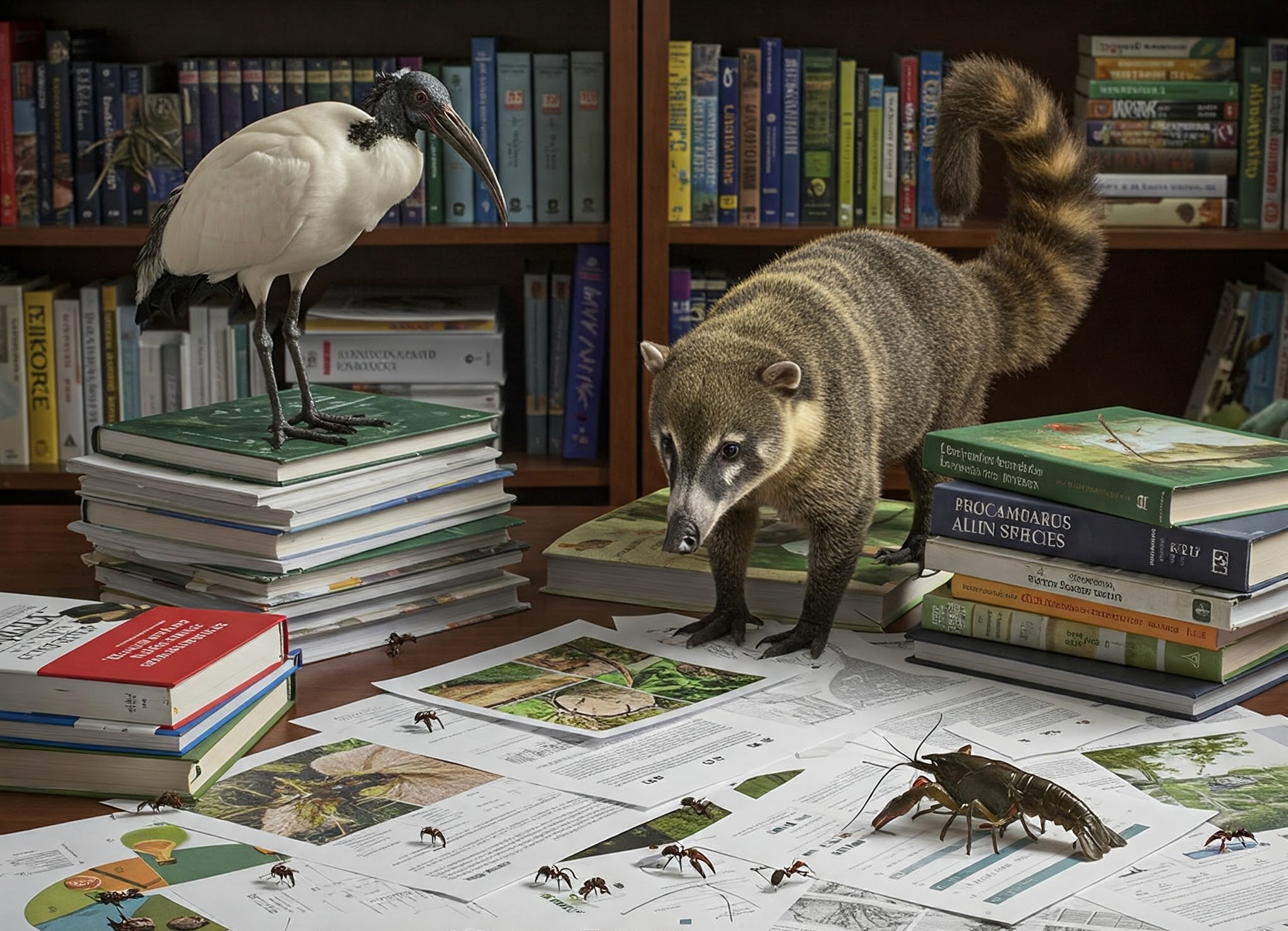
AI generated image (Gemini 2025)

In a world of complex and interconnected environmental challenges, biological invasions demand timely and coordinated action. The EU Regulation on IAS stands as a powerful tool in mitigating anthropogenic impacts. Its effectiveness, however, hinges on the availability and analysis of accurate, up-to-date information. Data, reports, monitoring systems, and scientific studies are not just supportive, they are foundamental pillars for targeted, transparent, and responsible environmental law implementation. A data-driven approach ensures precise interventions tailored to ecological needs, preventing ineffective or harmful decisions. The resources highlighted above, while not exhaustive, demonstrate the substantial body of knowledge dedicated to invasive alien species and the significant commitment of institutions like the European Commission in coordinating, developing, and disseminating vital tools and guidance for tackling biological invasions globally. 

February 17, 2025

New study offers hope for invasive hornets control

A 2024 study by Hassal and colleagues indicates promising developments in invasive hornet management and offers valuable insights for reassessing prevailing attitudes towards the warnings of ecological disasters from biological invasions (see details here). The main focus of the study - the yellow-legged hornet (Vespa velutina nigrithorax) - is an invasive species native to Asia, introduced in Europe over 20 years ago. Like other alien hornets, is a voracious predator of honeybees and other wild pollinators. Moreover like other hornets may pose a threat to human health. The study, funded by the European Commission to IUCN, highlights the importance of early detection and rapid eradication as a best option for successful management of this species and biological invasions in general. 

The yellow-legged hornet (Vespa velutina nigrithorax)
Drawing made by Massimiliano Lipperi © European Commission

It took about 10 years since the species was first detected in 2004 in France, before a comprehensive legislation would eventually be launched to address the multifaceted threats of biological invasions, specifically the EU Regulation no. 1143/2014 on invasive alien species. In the meantime, in the absence of adequate response action, the species got established not only in France, but also Italy, Spain, Portugal,  Switzerland, Germany, Belgium, the Netherlands, Luxembourg and Jersey. Moreover, scattered records were reported from Austria, Czechia, Hungary, Ireland, Slovakia, showing that the species may soon further expand its range to other countries.

The adoption of the EU Regulation on IAS has been key to start monitoring and slowing down the spread of this alien hornet. By means of modeling scenarios Hassal and colleagues have shown that the yellow-legged hornet could have spread even further if it hadn't been for the bulwark established by this benchmark legislation. The assessement of the potential extent of invasion by the yellow-legged hornet highlighted that if rapid eradication of early detections had not taken place, the species would have spread more rapidly particularly in Germany and the Netherlands (and in the UK, where early actions have allowed to prevent the spread of the species in the country). Based on environmental suitability for the species establishment and spread, the study also demonstrates the importance of the information collected in nearly real-time through NOTSYS,  the online system where EU Member States are required to notify early detections and rapid eradication measures regarding the yellow-legged hornet, along with any other alien species of Union concern. 

The control of the yellow-legged hornet in Belgium © Photo courtesy of Tim Adriaens
The advantages of a prompt action were further demonstrated by the recent eradication occurred in the United States of the northern giant hornet (Vespa mandarinia), actually the largest hornet in the world. It took only five years to declare this species native to Asia as extinct in the United States, where it was detected in 2019 (see details here).  This was a considerable relief for pollinators, which are already facing several challenges and didn't need another threat to deal with. And it was also an encouraging news for conservation biologists.

Nevertheless, it seems that new problems always arise: another species of alien hornets appeared on the horizon in the old continent. It is the case of the southern giant hornet (Vespa soror) recorded in Spain in 2022 (see details here). This is another aggressive predator originating from Asia, similar in size to the northern giant hornet (the one just eradicated from the United States), and which may have a huge impact on native wildlife, including several groups of invertebrates and well as small vertebrates, e.g. geckos, not to consider the potential health problems to people. Scientists advocating for urgent preventative measures toward new invasions of alien species are often dismissed as modern-day alarmist Cassandra. Despite their accuracy, predictions concerning the impact of invasive alien species - usually informed by documented evidence of ecological damage elsewhere - are often neglected. Yet, the evidence to address this potential new threat to biodiversity and human health as early as possible is unequivocal.

AI generated image (Google 2025)
You may infer from the examples above, it didn't take a Cassandra to foresee the potential consequences of such introductions, and that without prompt action the rapid spread of alien hornets across the entire continent would be inevitable. The Cassandra myth reminds us that scientists warnings of impending disasters are often unpopular and subsequently ignored. Might a more modern approach, such as consulting artificial intelligence (AI), prove more effective? We are just starting to rely on AI for surveillance measures, as shown by the example of the VespAI automated early warning system. It would be interesting to explore the warnings and advices that different AI platforms would provide in reply to the question: "What would happen if the southern giant hornet (Vespa soror) invaded Europe", and "Is it still possible to eradicate the southern giant hornet (Vespa soror) in Europe". The replies are unsurpringly clear and to the point, but also offer a clear window of opportunity ...Will AI eventually be regarded as a modern-day Cassandra, dismissed and ignored as well? 


November 14, 2016

Managing alien species pathways and vectors

Shipping and recreational boating, the movement of live bait and fire wood, cargo transport and wildlife trade, are only some of the pathways and vectors through which alien species are moved outside their natural range by humans. Transport, trade, travel and tourism provide vectors and pathways for live animals, plants, and other biological material to overcome those biogeographical barriers that would usually block their movement and spread. Given the multitude of such pathways and the variable impact they have, it is necessary to prioritize those pathways with the greatest impact on biodiversity and possibly manage them appropriately to enhance the prevention of biological invasions. 

Canada goose in "flight" © Photo: Riccardo Scalera

The importance of the threat of invasive alien species (IAS) pathways is reflected in a range of international, regional and national laws and agreements. For example, Target 9 of the Strategic Plan for Biodiversity 2011-2020 - adopted by the Convention on Biological Diversity (CBD) at the 10th COP - states: “By 2020, invasive alien species and pathways are identified and prioritized, priority species are controlled or eradicated, and measures are in place to manage pathways to prevent their introduction and establishment”. At the European level, the same goal is reported within target 5 of the Biodiversity Strategy to 2020 of the European Union (EU). As a result, all EU Member States, following the recent adoption of the EU Regulation on IAS, are required to develop action plans for the management of pathways: a significant improvement in the coordination, implementation, and consistency of pathway management across the region.

Also the Council of Europe provided significant support in this context. Since the development of the European Strategy on IAS in 2003, the Group of experts on Invasive Alien Species established by the Standing Committee to the Bern Convention in 1992,  has focussed its work on the identification and prioritisation of pathways, and started preparing targeted codes of conduct to address these. So far the Standing Committee has endorsed codes of conduct on IAS and activities such as horticulture, zoos and aquaria, botanic gardens, hunting, pets or recreational fishing (all codes are available here under documents/publications). Other codes are under development, including on plantation forestry and recreational boating. More recently, as reported by Recommendation N°179 (2015), the Bern Convention identified a number of activities to be carried out in coordination with the European Commission (EC), among which the possibility to draft a Guidance document on action plans for the management of IAS pathways.


The guidance document on IAS pathways action plans

The result is a document including three sections, namely an introduction (with an overview of the available information on identification, prioritisation and management of IAS pathways, along with preliminary results and future challenges on assessing priority pathways), a section describing the most relevant policy and legislation, and a core body including the actual guidelines on how to draft an action plan for dealing with IAS pathways. The following key sections of an ideal acton plan are described in the detail in the document of the Council of Europe:
  • Description of the target pathway
  • Policy and legal background
  • Aims and strategies
  • Identification of key stakeholders
  • Foreseen measures (Specific measures depending on the IAS  pathway targeted, Common measures for all management/action plans for IAS pathways)
  • Time schedule
  • Financial planning
Besides the elements of an ideal plan, the guidance document describes further elements to take into account for facilitating the management of the planning process, stressing the importance of a sound pre-planning phase.

Although the need of such guidance was inspired by the provisions of the EU regulation on IAS, the interest of this work is not to be considered limited to the EU Member States. This fits well with the Bern Convention role to further outside the EU the innovation of the EU Regulation on IAS, and represents another step in the process led by the Council of Europe in drafting key IAS related documents over the years, by stressing the added value of ensuring a harmonised approach in the region.

June 18, 2014

LIFE confirms financial support to alien species policy in Europe

On 18 June 2014 a new LIFE call has been launched, and invasive alien species (IAS) continue to be a priority issue for funding within the European Union (see previous post on the 2013 call here). The new LIFE Regulation, which establishes the EU financial Programme for the Environment and Climate Action, with a total budget set at 3.4 billion euro for the funding period 2014–2020, has been throughly revised. For example, the programme is now subdivided in the two sub-programmes Environment and Climate Action. Besides, to ensures both the necessary flexibility to achieve the LIFE Programme targets and objectives and the necessary stability for potential applicants to plan, prepare and submit proposals, a Multiannual Work Programme for 2014-17 has been adopted. 

LIFE aims at contributing to the achievement of the objectives and targets of the Europe 2020 Strategy, the 7th Union Environmental Action Programme and other relevant EU environment and climate strategies and plans. In this context, and as reported more in detail below, IAS are explicitly mentioned in the list of project topics implementing the environmental policy priorities under the three priority areas covered within the new "Environment" strand: environment and resource efficiency; nature and biodiversity; and environmental governance and information.  It is also worth remarking that now the newly revised programme – which is open to the participation of third countries and activities outside the EU - consists of a number of new categories of projects, including preparatory projects, integrated projects, technical assistance projects, capacity building projects. The project topics set in the multi-annual work programme refer to "traditional" projects in the Environment sub-programme. "Traditional" projects are indeed very similar to the old LIFE+ Nature, Biodiversity, Environment and Information projects, e.g. focusing on best practice, demonstration, pilot, and information projects. 

More in detail, within the  priority area “Nature and Biodiversity” the project topics which are given priority to contribute to Target 1 of the Biodiversity Strategy to 2020 to fully implement the Birds and Habitats Directives, thus under the Thematic priorities for Nature, include:
Projects targeting invasive alien species, where these are likely to deteriorate the conservation status of species (including birds) or habitat types of Community Interest in support of the Natura 2000 network 
Priority is also given to project topics focus on the implementation of Targets 2, 3, 4 and 5 of the Biodiversity Strategy to 2020, thus under the Thematic priorities for Biodiversity, such as:
Projects implementing actions targeting Invasive Alien Species (under Target 5 of the Biodiversity Strategy or in view of contributing to reaching the level of protection set out in descriptor 2 — Non-indigenous species of the Marine Strategy Framework Directive (1)) through actions testing and applying approaches aimed at:(a) preventing the introduction of invasive alien species, in particular by tackling pathways of unintentional introduction,(b) establishing an early warning and rapid response system, and(c) eradicating or controlling established invasive alien species on an appropriate spatial scale.
These projects shall address with their actions the three steps (prevention; early warning and rapid response; eradication/control) in a comprehensive framework, or, where one of the steps has already been addressed, their actions shall at least be clearly situated in a broader framework that links all three steps. They should be set up to improve existing — or introduce new — technical, administrative or legal frameworks on the relevant level; they should aim at preventing the broader establishment of IAS within the EU.
Finally, the project topics listed under the priority area "Environmental Governance and Information", include:
National and transnational awareness raising campaigns on invasive alien species (IAS) targeting the general public and key stakeholders including policy makers, businesses, and local, regional or national authorities.
LIFE projects focusing on IAS across the years (source: EEA report no.15/2012)

The experience of the last 20 years has shown that LIFE has been crucial to ensure the successful implementation of several activities focusing on IAS management and prevention, including new ways to address the wider IAS challenge (see "LIFE and alien species" report here). In fact, as shown in a recent report on biodiversity indicators (EEA report no.15/2012), both the number of LIFE projects funded and the relevant cost estimates have been markedly positive across the years. The relevant data have been used for the development of a set of response indicators, whose role should be primarily to track the measures being implemented to mitigate pressures and improve the state of biodiversity.  This trend has been interpreted as reflecting an increasing awareness of the IAS problem among EU institutions, wildlife managers, scientific institutions, and citizens, but could also indicate that within the EU, the problem with IAS is increasing.  

Thus, in the light of the recent developments regarding the EU regulation on the prevention and management of the introduction and spread of IAS, the new call and the overall novelties introduced within the new LIFE Regulation, are very welcome. In fact the new EU regulation on IAS seeks to address the problem in a comprehensive manner so as to protect native biodiversity and ecosystem services, as well as to minimize and mitigate the human health or economic impacts that these species can have. The IAS legislation now needs only to be formally approved by the Council of Ministers (see details here), and there is a clear need of dedicated financial resources for the implementation of the foreseen types of provision focusing on prevention, early warning and rapid response, and management.

For the 2014 call 132,8 million euro out of a total budget of 404,6 million euro are for nature and biodiversity only, including related governance and information. The deadline for submitting proposals is 16 October 2014. You can find further information, application forms and all official guidance documents here.

August 29, 2013

A silent invasion threatening European cities

The story of a rabbit population deep burrowing in a graveyard area, loosening the roots of trees, making tombstones fall, and horrifying people, may look like the plot of an old B horror movie. Yet, this is what the experts reported about the situation in Helsinki, where in 1985 rabbits established a feral population descended from pets dumped in the wild. Outside their natural range (the rabbit is native to the southern Iberian Peninsula), this species is considered as a key driver of ecosystem change, as it can cause extensive erosion of soils by overgrazing and burrowing which in turn can cause significant impact on the composition and local abundance of native wildlife. The impacts caused by this species can be very severe, also causing terms of economic losses. For example, until now the estimated economic impact of rabbit in Helsinki exceeds € 2 million. 

Feral rabbit © Photo: Riccardo Scalera

The rabbit is only one of the many alien species introduced in urban environments and whose impact is discussed in the new IUCN report “Invasive alien species: the urban dimensionThe IUCN report includes 26 case studies aimed at providing insights on problems, challenges, actions, approaches, human and financial resources, and lessons learnt, for a selection of species and countries. In fact the report was produced and released as a key output of the conference “Invasive alien species: the urban dimension” which will take place on 5 September at IUCN Headquarters, Switzerland. The objective of the conference is to emphasize the role of municipalities in the management of invasive alien species in urban environments, and more importantly, to highlight the importance of their contribution to the implementation of the new EU legislation for invasive alien species, which should finally be released in early September 2013. For more details and updated information on the conference and the upcoming EU legislation see here.


As shown by the many contributions published in the new IUCN report, urban environments – often characterised by high levels of disturbance, high intensity of transport, and high environmental heterogeneity - have usually played a crucial role in biological invasions. This is also due to the fact that within urban environments a number of potential entry points and pathways concentrate, such as botanical gardens and zoos, along with nurseries and private gardens. Besides, urban areas are privileged centres for some of the most prominent pathways and vectors, including trade of pets, ornamental plants, etc. which can increase the propagule pressure that facilitates the invasion processes. Not surprisingly, many studies have demonstrated that cities are hotspots of invasions, particularly for plants. Human settlements are often the point of origin of many invasive species, that from these areas then spread into adjacent landscapes along transport corridors such as railways, waterways and roads, in many cases eventually arriving to invade natural areas.

Drawing © Riccardo Scalera

It is clear that urban environments can play a much wider and important role in addressing the risks of biological invasions, e.g. for making citizens aware of the importance of biodiversity, and promoting the implementation of dedicated actions among the competent administrations. For example, many institutions usually based in towns, such as botanical gardens, zoos, aquaria, university departments, natural history museums, conservation agencies and institutions, can be key players in global conservation programmes, by and attracting and leveraging hundreds of millions citizens, thus contributing to public outreach and raising awareness. Many such institutions might offer unique opportunities for dedicated environmental education programmes, thus could contribute significantly to raising awareness to prevent the introduction of new invasive alien species (e.g. through specific information activities targeting the general public or specific stakeholders). Finally, as shown by the reported case study, local administrations can be players of fundamental importance for the successful implementation of conservation related activities, i.e. from research projects to eradication/control initiatives.