If I could return as an animal, I'd like to be a lizard—an Italian wall lizard, you bet! Known to scientists as
Podarcis siculus, this miniature, speedy dart of green is one of the world's most thriving and adaptable lizard species, and also a remarkably successful invader. Many introduced populations are now found far beyond their native range, which largely coincides with the Italian peninsula. Their global spread is often facilitated by humans, whether intentionally as pets or accidentally as hitchhikers on cars and trains. They can also be transported as contaminants alongside goods like building stones or nursery plants, particularly olive trees. Even the movement of Italian troops during the Spanish Civil War played a role in their introduction to Spain. But, as is often the case with alien species, once established outside their native range, they can quickly become a disruptive visitor that threatens local wildlife. Not surprisingly, some introduced populations of Italian wall lizards have been receiving increasing attention in recent years. A small population in Athens, Greece, was indeed eradicated a few years ago (mostly with the help of stray cats, for once a welcome ally of conservation biologists). Similarly, a few individuals were promptly removed at an early stage of introduction in Buckinghamshire, UK, and La Rioja, Spain.
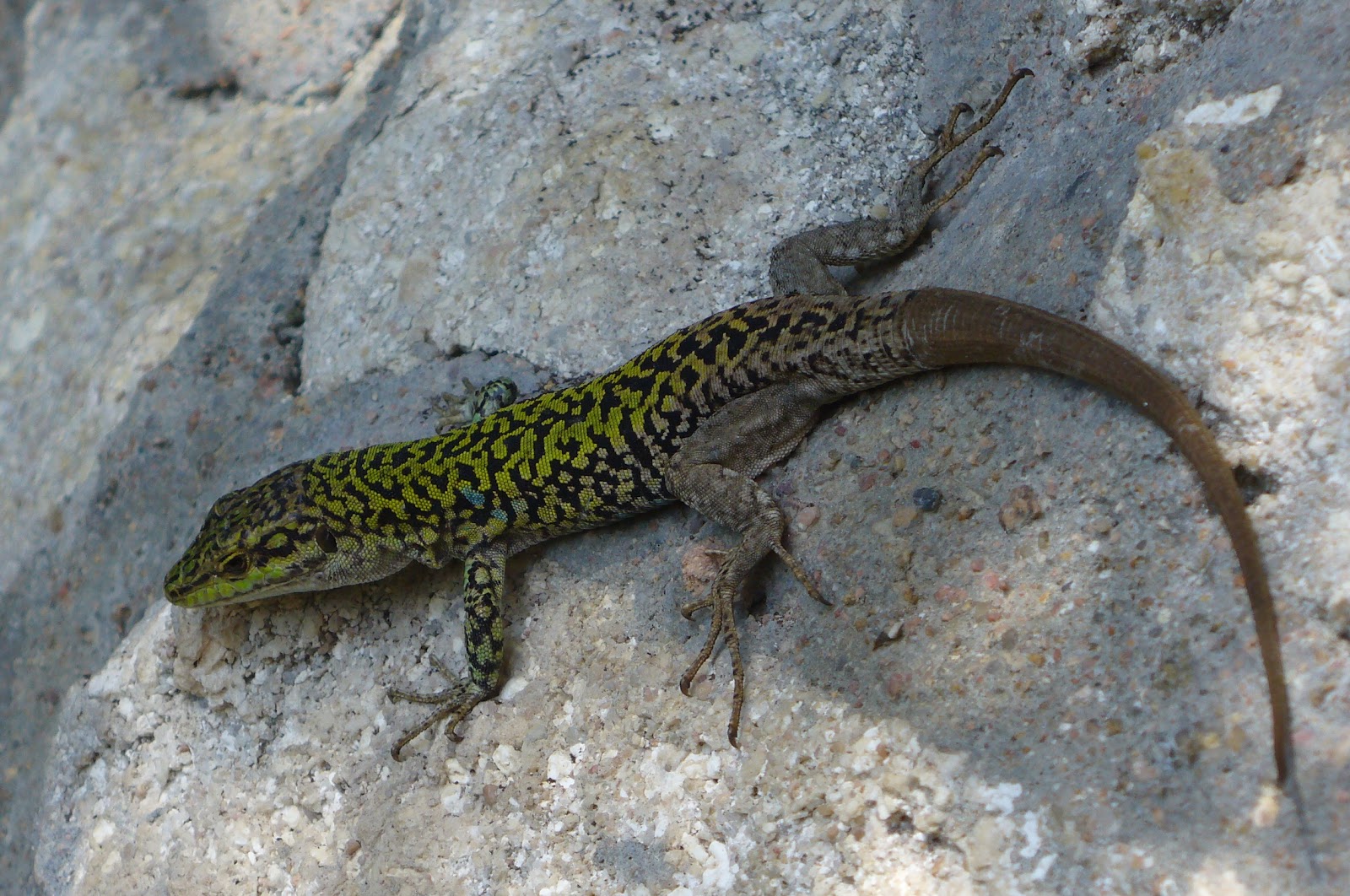 |
Italian wall lizard introduced in Corsica
© Photo: Riccardo Scalera
|
However, the most interesting project targeting Italian wall lizards is taking place in the Aeolian archipelago in Sicily, Italy. The Aeolian Islands are a fascinating, arid group of small islands and rocks that emerged from volcanic activity in a beautiful corner of the Mediterranean Sea some 500 000 years ago. Here, the endemic Aeolian lizard (Podarcis raffonei) thrived until the introduction of the Italian wall lizard. The endemic species is now confined to three small rocky islets—Strombolicchio, La Canna, and Scoglio Faraglione—and a very small stretch of land on Vulcano Island, where the progressive expansion of the Italian wall lizard has cornered the remnant population. To combat this decline, expert researchers from a number of institutions, led by Roma Tre University, have launched the project LIFE EOLIZARD, co-funded by the European Commission, with many other partners including L'Aquila University, the Rome zoo (Bioparco), CNR and Triton.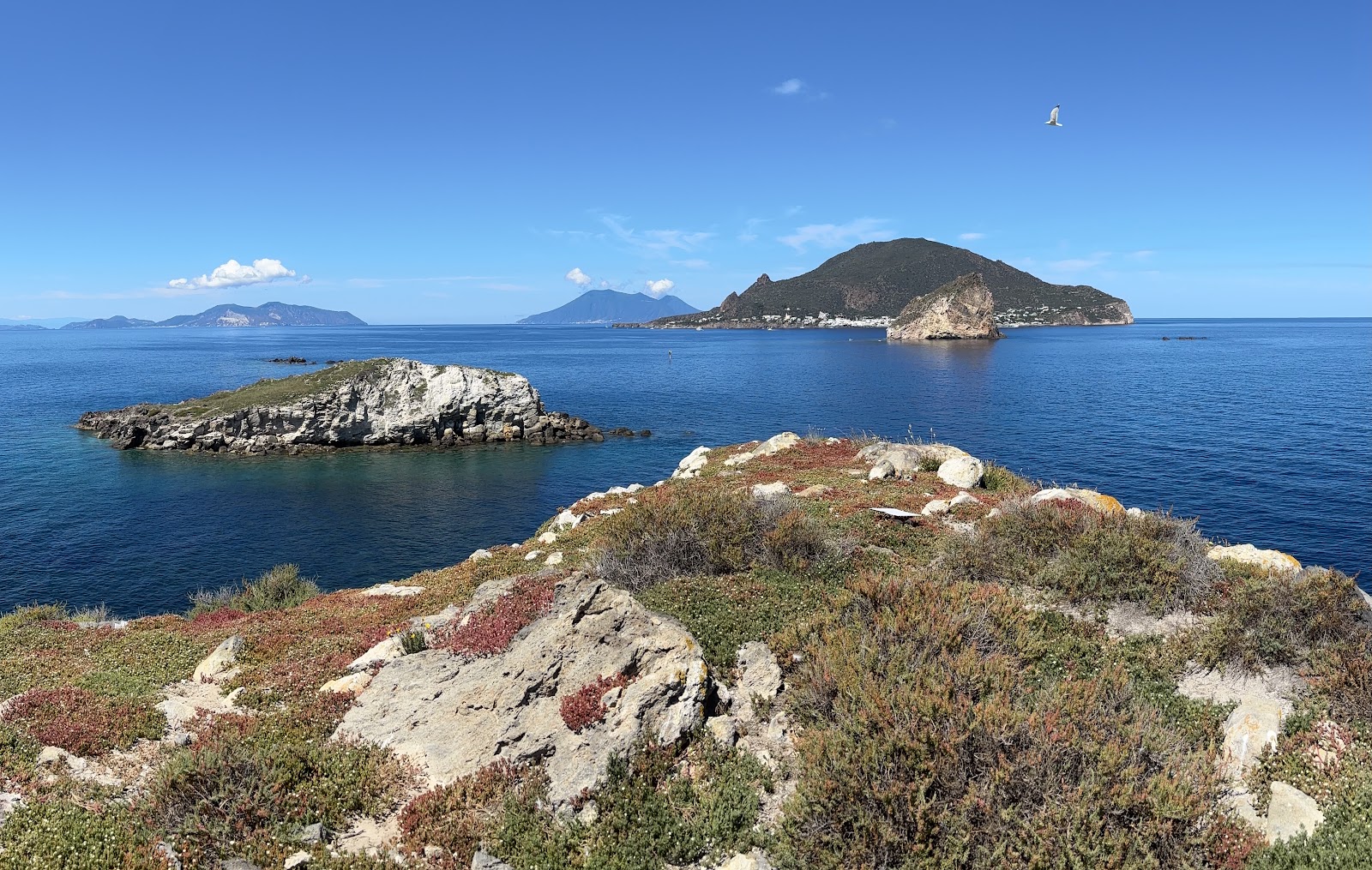 |
A view to the Aeolian archipelago from Lisca Bianca
© Photo: Riccardo Scalera |
This ambitious project, aimed at halting and reversing the decline of this unique lizard, is structured around three main pillars: a) removing a threat to an endangered species, b) captive breeding of the endangered species, and c) reintroducing the endangered species. The introduced populations of Italian wall lizard on the two small islets of Lisca Bianca or Bottaro will be completely removed to turn them into a sanctuary for the reintroduction of the endemic Aeolian lizard. In parallel, Aeolian lizards are being successfully reproduced at both the Rome zoo (Bioparco) and a dedicated breeding center on Salina Island, making the release of hundreds of new lizards possible for recovery purposes. In this sense, EOLIZARD is a truly unique project that integrates the removal of an alien species with the reintroduction of a captive-bred population facing imminent extinction. This combination of measures is expected to increase the global population size by up to 140%, thus offering an unparalleled opportunity for the endangered Aeolian lizard to significantly boost its chances of survival. It is also worth mentioning that, in consideration of the human dimension, the invasive alien lizards are not killed but relocated to a nearby island where genetic analysis shows a sibling population already exists: thousands of little lizards will be gently captured by trained experts luring them into safe traps with some sweet juice, then quickly transported to the verdant island of Panarea and released into suitable habitats. This humane approach is one of the project's most innovative features.
 |
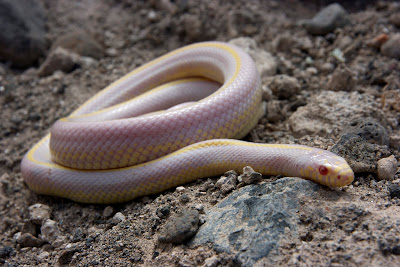
Aeolian lizard captive bred at the Rome zoo (Bioparco)
© Photo: Riccardo Scalera |
In a nutshell, EOLIZARD is exceptional because it operates as a living laboratory. This allows researchers to explore the ecological and evolutionary dynamics of both species and their ecosystems, including their relationship with human activity. Furthermore, comprehensive genetic analysis and health screenings performed on all animals provide a unique opportunity to understand population origins and the emergence of diseases, including potential zoonoses. The global significance of these efforts was widely recognized at an international workshop held in early June 2025 in Malfa, Salina Island, where world experts convened to share experiences on managing alien lizards and to discuss ideas for future research and collaboration. Insights shared at the workshop, drawing from a global dataset on lizard management, highlighted a critical hurdle: the lack of comprehensive reporting on management projects.
 |
EOLIZARD workshop participant
© Photo courtesy of Massimo Recupito (Triton)
|
Globally, approximately 20 species of invasive alien lizards are currently under some form of management, as highlighted at the EOLIZARD workshop. In Europe alone, where 50-70 species have been introduced or translocated outside their natural range within the region, the primary challenge with invasive lizards often comes from its own native Podarcis species. The Italian wall lizard for example is a remarkably successful and widespread invader, with established populations across much of Europe and beyond, including in Spain, Portugal, France, Switzerland, Greece, Croatia, Albania, Montenegro, Romania, Poland, Germany, Turkey, Tunisia, Libya, Azerbaijan, and the USA. The workshop's outcome was a clear call to action: we must develop effective methods for rapidly detecting and removing invasive lizard threats and, most importantly, implement measures to protect native species. In this context, the importance of the management and research activities carried out within the EOLIZARD project cannot be overstated. Never before has such an ambitious project been designed for a small lizard, neither in terms of the target alien population's size nor the area to be cleared. However, the project isn't without its risks. The complete removal of alien lizards could be quite challenging, especially when targeting the smartest or luckiest survivors, including newborns that may have escaped initial control efforts. Nevertheless, EOLIZARD has the potential to be a model for replication in many other areas.
This is a concrete example of the European Commission's conservation efforts. The Commission's approach is twofold: it aims to facilitate overall policy for alien species while also guiding local action. It achieves this by specifically funding innovative pilot, demonstration, and best practice projects through the
LIFE programme, with the goal of encouraging beneficiaries to actively replicate and scale up the results. Furthermore, these efforts align with previous initiatives, such as the detailed
management note for the Italian wall lizard. This note, also made for a number of other species, serves as an example of the measures needed to address threats from species that are native to some parts of the EU but invasive in others. These resources provide practitioners with crucial information on prevention, surveillance, rapid eradication, and long-term management. While the LIFE EOLIZARD project and the European Commission's mobilized resources are vital, the workshop's outcomes were clear: we must urgently improve data sharing, foster innovation in management techniques, and collectively raise the priority of addressing the subtle yet significant threat posed by invasive alien lizards.
In the meantime, without stricter biosecurity measures, the Italian wall lizard will inevitably continue its global expansion. The lizard not only possesses all the ecological traits of a successful invader but is also actively supported by humans from around the world who enjoy having them sunbathing in their yards. So, as a take-home message, if you love Italian wall lizards as I do, don't take them with you abroad. Instead, just enjoy a visit to the Italian peninsula. You'll see plenty of them there and bring home great memories too!