Showing posts with label funding. Show all posts

July 14, 2025

The Italian wall lizard: a conservation tale of a successful invader

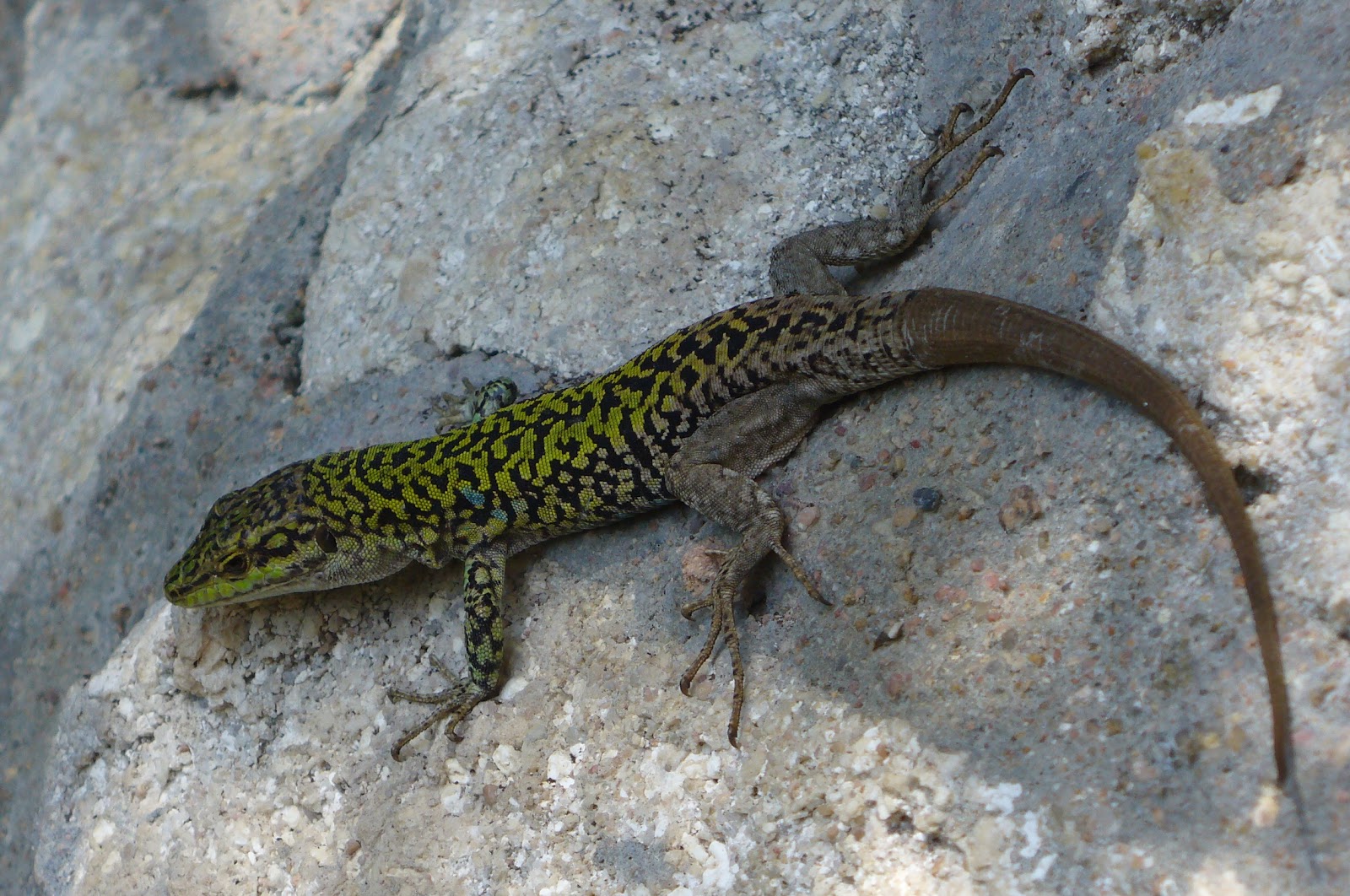
If I could return as an animal, I'd like to be a lizard—an Italian wall lizard, you bet! Known to scientists as Podarcis siculus, this miniature, speedy dart of green is one of the world's most thriving and adaptable lizard species, and also a remarkably successful invader. Many introduced populations are now found far beyond their native range, which largely coincides with the Italian peninsula. Their global spread is often facilitated by humans, whether intentionally as pets or accidentally as hitchhikers on cars and trains. They can also be transported as contaminants alongside goods like building stones or nursery plants, particularly olive trees. Even the movement of Italian troops during the Spanish Civil War played a role in their introduction to Spain. But, as is often the case with alien species, once established outside their native range, they can quickly become a disruptive visitor that threatens local wildlife. Not surprisingly, some introduced populations of Italian wall lizards have been receiving increasing attention in recent years. A small population in Athens, Greece, was indeed eradicated a few years ago (mostly with the help of stray cats, for once a welcome ally of conservation biologists). Similarly, a few individuals were promptly removed at an early stage of introduction in Buckinghamshire, UK, and La Rioja, Spain.

Italian wall lizard introduced in Corsica
© Photo: Riccardo Scalera

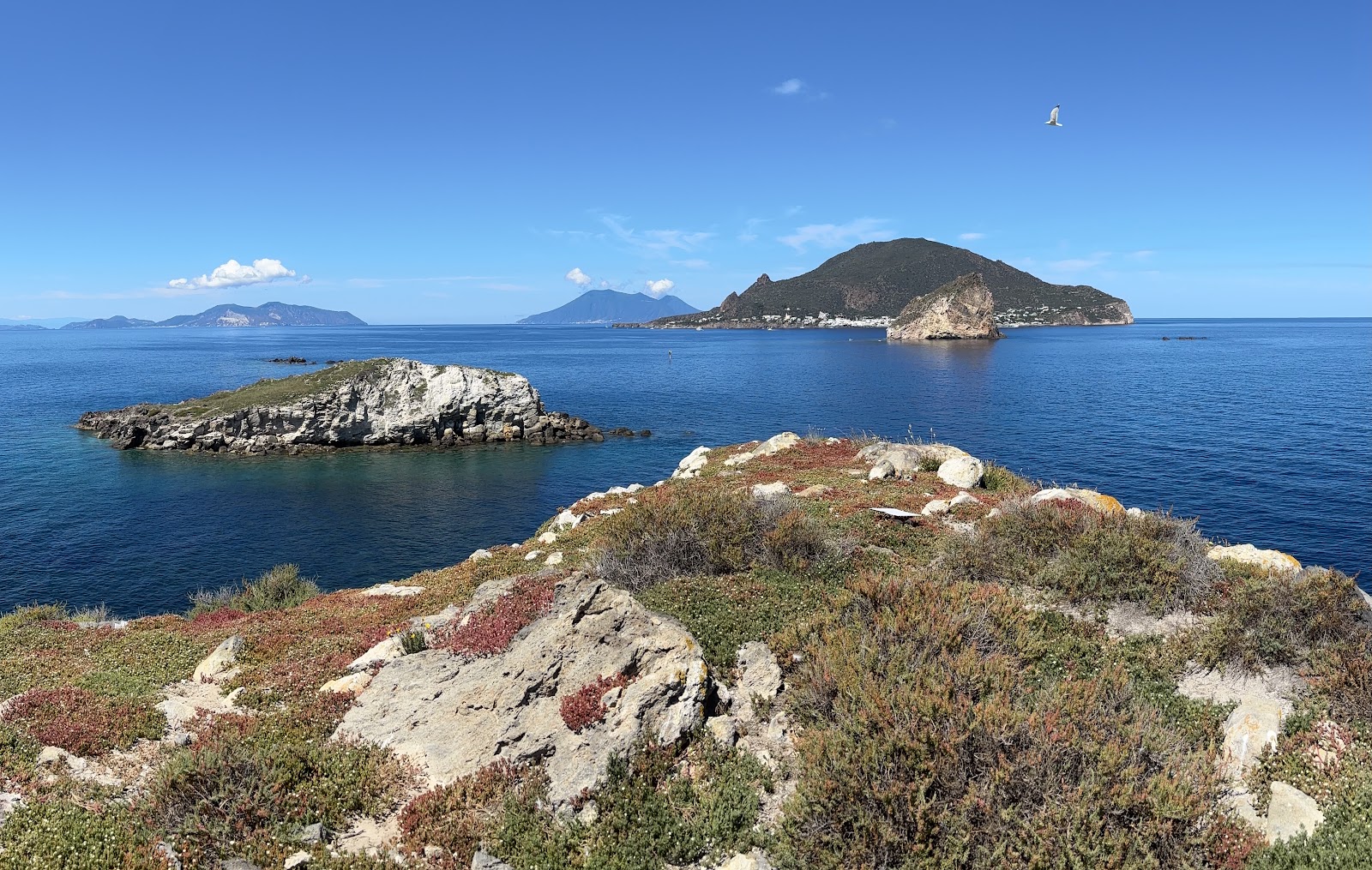
However, the most interesting project targeting Italian wall lizards is taking place in the Aeolian archipelago in Sicily, Italy. The Aeolian Islands are a fascinating, arid group of small islands and rocks that emerged from volcanic activity in a beautiful corner of the Mediterranean Sea some 500 000 years ago. Here, the endemic Aeolian lizard (Podarcis raffonei) thrived until the introduction of the Italian wall lizard. The endemic species is now confined to three small rocky islets—Strombolicchio, La Canna, and Scoglio Faraglione—and a very small stretch of land on Vulcano Island, where the progressive expansion of the Italian wall lizard has cornered the remnant population. To combat this decline, expert researchers from a number of institutions, led by Roma Tre University, have launched the project LIFE EOLIZARD, co-funded by the European Commission, with many other partners including L'Aquila University, the Rome zoo (Bioparco), CNR and Triton.

A view to the Aeolian archipelago from Lisca Bianca
© Photo: Riccardo Scalera 
This ambitious project, aimed at halting and reversing the decline of this unique lizard, is structured around three main pillars: a) removing a threat to an endangered species, b) captive breeding of the endangered species, and c) reintroducing the endangered species. The introduced populations of Italian wall lizard on the two small islets of Lisca Bianca or Bottaro will be completely removed to turn them into a sanctuary for the reintroduction of the endemic Aeolian lizard. In parallel, Aeolian lizards are being successfully reproduced at both the Rome zoo (Bioparco) and a dedicated breeding center on Salina Island, making the release of hundreds of new lizards possible for recovery purposes. In this sense, EOLIZARD is a truly unique project that integrates the removal of an alien species with the reintroduction of a captive-bred population facing imminent extinction. This combination of measures is expected to increase the global population size by up to 140%, thus offering an unparalleled opportunity for the endangered Aeolian lizard to significantly boost its chances of survival. It is also worth mentioning that, in consideration of the human dimension, the invasive alien lizards are not killed but relocated to a nearby island where genetic analysis shows a sibling population already exists: thousands of little lizards will be gently captured by trained experts luring them into safe traps with some sweet juice, then quickly transported to the verdant island of Panarea and released into suitable habitats. This humane approach is one of the project's most innovative features.

Aeolian lizard captive bred at the Rome zoo (Bioparco)
© Photo: Riccardo Scalera

In a nutshell, EOLIZARD is exceptional because it operates as a living laboratory. This allows researchers to explore the ecological and evolutionary dynamics of both species and their ecosystems, including their relationship with human activity. Furthermore, comprehensive genetic analysis and health screenings performed on all animals provide a unique opportunity to understand population origins and the emergence of diseases, including potential zoonoses. The global significance of these efforts was widely recognized at an international workshop held in early June 2025 in Malfa, Salina Island, where world experts convened to share experiences on managing alien lizards and to discuss ideas for future research and collaboration. Insights shared at the workshop, drawing from a global dataset on lizard management, highlighted a critical hurdle: the lack of comprehensive reporting on management projects. 

EOLIZARD workshop participant
© Photo courtesy of Massimo Recupito (Triton)


Globally, approximately 20 species of invasive alien lizards are currently under some form of management, as highlighted at the EOLIZARD workshop. In Europe alone, where 50-70 species have been introduced or translocated outside their natural range within the region, the primary challenge with invasive lizards often comes from its own native Podarcis species. The Italian wall lizard for example is a remarkably successful and widespread invader, with established populations across much of Europe and beyond, including in Spain, Portugal, France, Switzerland, Greece, Croatia, Albania, Montenegro, Romania, Poland, Germany, Turkey, Tunisia, Libya, Azerbaijan, and the USA. The workshop's outcome was a clear call to action: we must develop effective methods for rapidly detecting and removing invasive lizard threats and, most importantly, implement measures to protect native species. In this context, the importance of the management and research activities carried out within the EOLIZARD project cannot be overstated. Never before has such an ambitious project been designed for a small lizard, neither in terms of the target alien population's size nor the area to be cleared. However, the project isn't without its risks. The complete removal of alien lizards could be quite challenging, especially when targeting the smartest or luckiest survivors, including newborns that may have escaped initial control efforts. Nevertheless, EOLIZARD has the potential to be a model for replication in many other areas.


This is a concrete example of the European Commission's conservation efforts. The Commission's approach is twofold: it aims to facilitate overall policy for alien species while also guiding local action. It achieves this by specifically funding innovative pilot, demonstration, and best practice projects through the LIFE programme, with the goal of encouraging beneficiaries to actively replicate and scale up the results. Furthermore, these efforts align with previous initiatives, such as the detailed management note for the Italian wall lizard. This note, also made for a number of other species, serves as an example of the measures needed to address threats from species that are native to some parts of the EU but invasive in others. These resources provide practitioners with crucial information on prevention, surveillance, rapid eradication, and long-term management. While the LIFE EOLIZARD project and the European Commission's mobilized resources are vital, the workshop's outcomes were clear: we must urgently improve data sharing, foster innovation in management techniques, and collectively raise the priority of addressing the subtle yet significant threat posed by invasive alien lizards. 

In the meantime, without stricter biosecurity measures, the Italian wall lizard will inevitably continue its global expansion. The lizard not only possesses all the ecological traits of a successful invader but is also actively supported by humans from around the world who enjoy having them sunbathing in their yards. So, as a take-home message, if you love Italian wall lizards as I do, don't take them with you abroad. Instead, just enjoy a visit to the Italian peninsula. You'll see plenty of them there and bring home great memories too!

May 22, 2025

The gateway to essential resources for biological invasions

Invasive alien species (IAS) pose a major threats to global biodiversity, as recently highlighted by the IPBES assessment, nevertheless 83% of countries globally do not have a legislation specifically dedicated to address invasive alien species. A notable exception is the European Union, where the policy framework to deal with biological invasions is relatively robust, particularly thanks to Regulation (EU) No 1143/2014. At the core of this legislation is a list of IAS of Union concern, which currently includes 88 species. This legislation has been always characterised by an inclusive and evidence-based approach to policy-making, thanks to the conspicuous work regularly carried out at the science-policy interface. Advancing scientific knowledge has been fundamental to both the shaping and implementation of the EU Regulation on IAS from the start. On the other hand, its enforcement has generated a vast amount of valuable data and information, relevant across diverse fields, from wildlife management and biology conservation to social science and humanities. 

Specifically, during the ten years of implementation of this legislation the European Commission has developed extensive resources - approximately 300 documents and tools - to support Member States to take action in a coordinated and effective way. These include, among the others, risk assessments, notes on measures and costs for the management of over 100 species, manuals for the management of vertebrates (including welfare issues), identification guides for field and customs (along with posters and cards for awareness raising purposes), reports on nomenclature and taxonomical issues, manuals for surveillance systems (including case studies), guidance for the interpretation of CBD pathway categories, pathway management analyses with a focus on e.g., ants, wasps, flatworms, as well as specific reports o soil, topsoil, use of chemicals, the role of alien species in the spread of zoonosis, etc. While many of these documents focus on the 88 species of Union concern (as well as species proposed for listing and many others), many have broader relevance, extending beyond Europe. 

Navigating this incredible amount of resources made freely available online by the European Union and related agencies, can be sometime challenging and requires some familiarity with the relevant webpages and portals. Here’s a guide to key starting points:

For a more comprehensive collection of readily accessible resources, the CIRCABC represents a crucial repository, which includes two separate primary libraries:

  • Invasive Alien Species. Here it is possible to explore a moltitude of documents and reports collected in several folders.
  • Scientific Forum on Invasive Alien Species. Particularly valuable for risk assessments made of species currently in the Union list, but also those which did not qualify or that are proposed and are being discussed by Member States.

Information on hundreds of projects on alien species management funded by the European Commission through the LIFE programme, along with the many outputs produced by each of them, can be found by exploring the online LIFE Public Database.

Another valuable resource is the EASIN website managed by the Joint Research Centre (JRC) of the European Commission, where it is possible to directly access a fair amount of resources. Besides hosting a number of useful technical documents, EASIN hosts data management platforms (EASIN catalogue, EASIN geodatabase), capacity-building resources, stakeholder engagement platforms, and more importantly NOTSYS - the European Alien Species Information Network Notification System - an extremely powerful tool aimed at facilitating notifications about new IAS observations and management measures in real time. 

Also the European Environment Agency (EEA) hosts some repositories with basic documents and tools: 

To easily access species-specific management notes and other similar documents, it is also possible to visit the IUCN webpage of external resources for invasive alien species.  

AI generated image (Gemini 2025)

In a world of complex and interconnected environmental challenges, biological invasions demand timely and coordinated action. The EU Regulation on IAS stands as a powerful tool in mitigating anthropogenic impacts. Its effectiveness, however, hinges on the availability and analysis of accurate, up-to-date information. Data, reports, monitoring systems, and scientific studies are not just supportive, they are foundamental pillars for targeted, transparent, and responsible environmental law implementation. A data-driven approach ensures precise interventions tailored to ecological needs, preventing ineffective or harmful decisions. The resources highlighted above, while not exhaustive, demonstrate the substantial body of knowledge dedicated to invasive alien species and the significant commitment of institutions like the European Commission in coordinating, developing, and disseminating vital tools and guidance for tackling biological invasions globally. 

June 18, 2014

LIFE confirms financial support to alien species policy in Europe

On 18 June 2014 a new LIFE call has been launched, and invasive alien species (IAS) continue to be a priority issue for funding within the European Union (see previous post on the 2013 call here). The new LIFE Regulation, which establishes the EU financial Programme for the Environment and Climate Action, with a total budget set at 3.4 billion euro for the funding period 2014–2020, has been throughly revised. For example, the programme is now subdivided in the two sub-programmes Environment and Climate Action. Besides, to ensures both the necessary flexibility to achieve the LIFE Programme targets and objectives and the necessary stability for potential applicants to plan, prepare and submit proposals, a Multiannual Work Programme for 2014-17 has been adopted. 

LIFE aims at contributing to the achievement of the objectives and targets of the Europe 2020 Strategy, the 7th Union Environmental Action Programme and other relevant EU environment and climate strategies and plans. In this context, and as reported more in detail below, IAS are explicitly mentioned in the list of project topics implementing the environmental policy priorities under the three priority areas covered within the new "Environment" strand: environment and resource efficiency; nature and biodiversity; and environmental governance and information.  It is also worth remarking that now the newly revised programme – which is open to the participation of third countries and activities outside the EU - consists of a number of new categories of projects, including preparatory projects, integrated projects, technical assistance projects, capacity building projects. The project topics set in the multi-annual work programme refer to "traditional" projects in the Environment sub-programme. "Traditional" projects are indeed very similar to the old LIFE+ Nature, Biodiversity, Environment and Information projects, e.g. focusing on best practice, demonstration, pilot, and information projects. 

More in detail, within the  priority area “Nature and Biodiversity” the project topics which are given priority to contribute to Target 1 of the Biodiversity Strategy to 2020 to fully implement the Birds and Habitats Directives, thus under the Thematic priorities for Nature, include:
Projects targeting invasive alien species, where these are likely to deteriorate the conservation status of species (including birds) or habitat types of Community Interest in support of the Natura 2000 network 
Priority is also given to project topics focus on the implementation of Targets 2, 3, 4 and 5 of the Biodiversity Strategy to 2020, thus under the Thematic priorities for Biodiversity, such as:
Projects implementing actions targeting Invasive Alien Species (under Target 5 of the Biodiversity Strategy or in view of contributing to reaching the level of protection set out in descriptor 2 — Non-indigenous species of the Marine Strategy Framework Directive (1)) through actions testing and applying approaches aimed at:(a) preventing the introduction of invasive alien species, in particular by tackling pathways of unintentional introduction,(b) establishing an early warning and rapid response system, and(c) eradicating or controlling established invasive alien species on an appropriate spatial scale.
These projects shall address with their actions the three steps (prevention; early warning and rapid response; eradication/control) in a comprehensive framework, or, where one of the steps has already been addressed, their actions shall at least be clearly situated in a broader framework that links all three steps. They should be set up to improve existing — or introduce new — technical, administrative or legal frameworks on the relevant level; they should aim at preventing the broader establishment of IAS within the EU.
Finally, the project topics listed under the priority area "Environmental Governance and Information", include:
National and transnational awareness raising campaigns on invasive alien species (IAS) targeting the general public and key stakeholders including policy makers, businesses, and local, regional or national authorities.
LIFE projects focusing on IAS across the years (source: EEA report no.15/2012)

The experience of the last 20 years has shown that LIFE has been crucial to ensure the successful implementation of several activities focusing on IAS management and prevention, including new ways to address the wider IAS challenge (see "LIFE and alien species" report here). In fact, as shown in a recent report on biodiversity indicators (EEA report no.15/2012), both the number of LIFE projects funded and the relevant cost estimates have been markedly positive across the years. The relevant data have been used for the development of a set of response indicators, whose role should be primarily to track the measures being implemented to mitigate pressures and improve the state of biodiversity.  This trend has been interpreted as reflecting an increasing awareness of the IAS problem among EU institutions, wildlife managers, scientific institutions, and citizens, but could also indicate that within the EU, the problem with IAS is increasing.  

Thus, in the light of the recent developments regarding the EU regulation on the prevention and management of the introduction and spread of IAS, the new call and the overall novelties introduced within the new LIFE Regulation, are very welcome. In fact the new EU regulation on IAS seeks to address the problem in a comprehensive manner so as to protect native biodiversity and ecosystem services, as well as to minimize and mitigate the human health or economic impacts that these species can have. The IAS legislation now needs only to be formally approved by the Council of Ministers (see details here), and there is a clear need of dedicated financial resources for the implementation of the foreseen types of provision focusing on prevention, early warning and rapid response, and management.

For the 2014 call 132,8 million euro out of a total budget of 404,6 million euro are for nature and biodiversity only, including related governance and information. The deadline for submitting proposals is 16 October 2014. You can find further information, application forms and all official guidance documents here.