June 05, 2013

Alarm for invasive hornet rapidly expanding European range


It was easy to predict the arrive of the Asian hornet in Italy. This invasive alien species native to South-East Asia, was recorded in Europe for the first time in France in 2004, where it was probably introduced accidentally through the horticultural trade. It spread very rapidly across south-western France (at around 100 km per year), and soon reached Spain, Portugal and Belgium. At the time the EEA report on invasive alien species impact was published (December 2012) it was considered likely to arrive soon also in Italy and Great Britain. In fact the news of the arrive of this hornet in Italy was circulated in May 2013, although the new record of the species originates from monitoring activities carried out already in November 2012 (see press release of the University of Turin). This shows that an effective early warning and rapid response system for alien species in Europe is urgently needed, so as to prevent further impacts related to biological invasions.

The Asian hornet © Photo courtesy of Quentin Rome

Invasion risk modelling already suggested that the Asian hornet - Vespa velutina or yellow-legged hornet to be more precise - could spread over a large part of Europe (see article published on Aliens no.31). And there are good reasons to be concerned about the spread of this “giant wasp”. With a body length of 2-3 cm Vespa velutina is in fact a social wasp slightly smaller than the native European hornet Vespa crabro. The head is black with an orange-yellow face. The body is dark brown or black velvety, bordered with a fine yellow band and a single abdominal segment almost entirely yellowy-orange, which makes it difficult to confuse with any other species.


The Asian hornet and its nest © Photo courtesy of Quentin Rome

The Asian hornet is mainly a predator of social wasps and bees, and like the European hornet, it also consumes a wide variety of other insect preys. Honeybees are among the hornet’s main preys, so the Asian hornet is expected to have an economic impact on beekeeping activities. In fact, as a highly effective predator, the new hornet may represent an additional component to the decline of honey bee populations in Europe and its big colonies and diet spectrum suggest that it could have a noticeable impact on biodiversity, including many wild pollinators and other beneficial insects. Otherwise, this species is no more dangerous for humans than the European hornet as in general it is not aggressive. However, its large size, painful sting and noisy flight make it a very frightening insect (and stings may potentially cause life threatening allergic reactions). In general, they will not attack as long as the colonies remain undisturbed, so it is necessary to avoid getting close to their very large nests, which are from 50 to 80 cm in diameter, and might be found in tall trees in urban and rural areas, including garages, sheds, and sometime in holes in walls or in the ground.

The life-cycle of this social insect is very efficient: each colony, initiated by a single individual, can produce several thousands of workers, plus hundreds of males and new founders able to mate and subsequently produce new colonies. Nevertheless research to develop an effective control method for Asian hornets is still in progress. You can find additional information about the species and the relevant management options, as well as the contact details for expert assistance on this link.

April 07, 2013

Marine mammals on their way to new seas

White whales and grey seals have found a new home in the Black sea. In fact one of the largest organism introduced by humans  outside its natural range is the beluga. This beautiful marine mammal, not to be confused with the homonymous European sturgeon, is also known as white whale (the word beluga derives from white, in Russian). It should be remarked that the name is a bit misleading, as the beluga is a toothed cetacean and as such is rather a dolphin than a whale. Like other dolphins, belugas have been introduced in the Black Sea as a consequence of escapes and/or releases from coastal dolphinaria and oceanaria (where animals are kept in near-shore open-air pens which do not adequately prevent escapes of captive animals into the sea - see also a previous article here). The story of the beluga whale in the Black Sea started in the early 1990s, when one individual captured in Sakhalin Bay, Russia, was transferred to Crimea, Ukraine, where it was immediately released, or escaped, into the sea (actually, it was recaptured once, and then soon after released/escaped again). Another beluga was indeed released (or escaped) at the same time and place, and was also observed and reported in the wild several times. The two beluga whales were often observed in the wild near the Turkish, Romanian, Bulgarian and Ukrainian coasts, but their current status is unknown (more details on Birkun 2002; Reeves & Notarbartolo di Sciara 2006).

Interestingly the list of marine mammals spontaneously released in the Black Sea includes also other species, like the grey seal, the northern fur seal, the Steller sea lion, the harbour seal, the Caspian seal and, possibly, some other pinnipeds. Such cases of escape/release have been known in the Black Sea since the early 1980s, but occurred also in other regions. For example, the escape of a sea lion from an aquarium to the wild is also known in the Canary Islands. Otherwise three sea lions escaped from the Prague zoo after the severe flood of 2002, they were all recaptured within a few days, but one of them managed to roam for hundreds of kilometers along the Elbe river from Prague to Dresden, before being recaptured.


Harbour seals at Copenhagen zoo ©  Photo: Vibe Kjaedegaard

The number of animals escaped and/or released in the Black Sea is unknown (but is likely around a few tens), and also the actual fate and impact of the relevant species is uncertain. It is likely that the marine mammals escaped from dolphinaria and similar facilities did never lead to established populations, however it is known that species may have a very long lag phase before getting naturalised, or showing any impact. Of course this does not mean that in the meantime they do not affect the hosting ecosystem. This is especially true in the case of long-living organisms, in which case also a single animal can have a major impact on the ecosystem. For example there is some concern that they could be a source of infections circulating in dolphinaria. In any case such introductions show that the extent of the problem can be unexpectedly large, both in terms of size of animals moved from place to place, and in terms of size of ecosystem affected.

On the other hand, a recent paper by Gladilina & colleagues (2013) highlighted some positive aspect related to the introduction of an exotic grey seal in the Black Sea. The presence of this North Atlantic species has been regularly recorded in the north-east Black Sea since 2001. Its introduction is considered the consequence of an escape from captivity. Surprisingly, no major conflicts have been recorded with fisheries, as fishermen seem to tolerate the presence of this mammal despite the little damage to fishing gears. In any case, the seal seems perfectly adapted to the new environment. This led Gladilina and colleagues to assume that the long term survival of the grey seal in the Black Sea might indicate the possibility of successful re-colonization of the area by monk seals, the only extant aboriginal pinniped in the Black Sea, disappeared at the end of the 20th Century. Hopefully this will be compatible with the growing "novel" community of marine mammals.

February 27, 2013

Always look on the bright side of LIFE!


Up to € 278 million are available to EU Member States for projects under the seventh LIFE+ call for proposals recently published, and also this year invasive alien species (IAS) are explicitly mentioned within the “Indicative list of themes for LIFE+ Nature and Biodiversity projects”. This means that biological invasions are one of the themes for which the European Commission (EC) would welcome receiving proposals to be co-financed. In fact, two headings are particularly suitable for addressing the problems of IAS: Nature and Biodiversity (NAT) and Information and Communication (INF). For example, according to the NAT application brochure:
 Within the classic LIFE+ Nature projects most of the priorities listed in the EU Biodiversity Strategy to 2020 may be effectively addressed: e.g. invasive alien species through control and eradication in and around Natura 2000 sites
LIFE and IAS
The LIFE brochure on IAS


Under the NAT heading, two different strands exist, which are characterized by different requirements and approaches. Under the LIFE+ Nature strand, it is possible to submit projects for the control and eradication of IAS affecting either the Natura 2000 network or species covered by the Habitats and Birds Directives. Site-related conservation measures for combating IAS can be planned both inside Natura 2000 sites (insofar as they are not recurring actions and they directly benefit the species/habitats targeted by the project) and outside Natura 2000 sites. In the latter case, such measures should be carried out  on strategic spots near or adjacent to a Natura 2000 site to improve the conservation status of the species/habitats target, and to limit or prevent damage within the site. In case of species-related conservation actions for combating IAS (that are not site-related), they can be eligible insofar as they directly benefit the species of the Birds and/or Habitats Directives targeted by the project. Some special requirements must be considered in such a case. For example, applicants must provide guarantees and commitments that the investments made will be sustained in the long-term. The explanatory notes of pag.53 of the application brochure provide some additional indications on the requirements for the range of actions that can be envisaged, e.g. prevention of introductions through the prioritisation and management of pathways, establishment of early warning and rapid eradication system, and management of established IAS. The important is to show solid scientific evidence regarding the added value of the foreseen actions for the Natura 2000 sites/network, and to include an awareness raising component, particularly towards stakeholders involved in the introduction of IAS.

In case of projects aiming at tackling IAS not necessarily in respect to the Natura 2000 network, it is possible to consider submit proposals under the LIFE+ Biodiversity strand, in which case they must have a clear innovative/demonstrative character. For this particular strand, the application brochure welcomes 
projects addressing the threats posed by IAS (1) by preventing the introduction of invasive alien species, in particular by tackling pathways of unintentional introduction, (2) by establishing an early warning and rapid response system and (3) by eradicating or controlling established invasive alien species (in line with the dedicated legislative instrument which is currently under preparation, see here). 
Also in this case, the explanatory notes of pag.57 of the application brochure provide some useful clarification. In fact, also such proposals should include an awareness raising component, in particular towards stakeholders involved in the potential introduction of IAS, and should have measurable biodiversity benefits as one of their main outcomes. Besides, the foreseen actions should be targeted towards the achievement of the 2020 Biodiversity Strategy.

It is also possible to present projects dealing with the IAS issue within the INF heading. In relation to this Information and Communication strand, it is worth mentioning that the LIFE+ programme has developed a logical framework useful to design an effective communication campaign, likely to achieve some measurable impact on the environmental problem targeted (e.g. the impact of IAS) and on the level of awareness (about IAS and their threat), by addressing a specific target audience and gaining the support of specific stakeholders, and by monitoring such impact through specific indicators. More details are included in the LIFE+ INF 2013 Application Guide.

February 12, 2013

The invasion of the allergenic ragweed in Europe


The common ragweed is one of the most pollen-allergenic plants and as such represents a serious health risk for humans. Its pollen is a potent trigger of hay fever, rhinoconjunctivitis, and may often cause severe asthma-like symptoms. In Europe the incidence of ragweed allergy ranges widely from 2-50% of the allergic population (roughly ¼ of the European population shows general allergic rhinitis). The impact of common ragweed on human health – affecting mostly children and urban populations (but also horses, dogs and cats) - is not restricted to areas invaded by the plant. In fact, due to transport of ragweed pollen by air masses, allergy reactions are recorded in distances of 100s of km from the site where the plant is situated. Besides, the common ragweed also contains volatile oils that may cause skin irritation and hypersensitivity dermatitis. The associated economic costs are estimated to be around 4.5 billions of euro per year. In addition to this, the ragweed can also have an harmful impact on other sectors, such as agriculture (depending on infestation levels and success of control, yield losses of over 50% are reported). 

A synthetic and systematic review of all available information on the current extent of ragweed infestation in Europe has just been published by the EU within the new comprehensive report “Assessing and controlling the spread and the effects of common ragweed in Europe”.  The study, carried out by an international team of experts led by the Natural Environment Research Council (UK), includes an economic, social and environmental quantification of direct and indirect harmful effects in all sectors, as well as an assessment of measures to control ragweed spread and introduction (now and in future climates). 

Common ragweed (male flowers) ©  Photo: Daniela Bouvet

The common ragweed is actually a native to North America, which has colonised several countries around the world – e.g. Europe, as well as parts of Australia, China, Japan, South America and Taiwan – mostly as a contaminant of agricultural products (including the grain mixtures used as food for birds), machinery or construction materials. In Europe, where it was first introduced in France and Germany in the 1860s, started its spread in the entire region some 20-25 years ago. The result is that large populations of ragweed are now present in the old continent, particularly in Croatia, France, Hungary and Italy, but the distribution range is still expanding as a consequence of changing climate and perhaps adaptation to local climate. Moreover, changes in agricultural land use with large-scale set-aside and abandonment practices, along with an increase of the construction sites and wasteland, are expected to provide new suitable habitats for ragweed. 

The key successful features of this annual herbaceous plant - which can reach a height of over 2 m - are its great adaptability to hostile habitats, its strong ability for re-growth after mowing, and the capability of seeds to remain viable for up to 35 years in soil seed banks. It is most frequently associated with agriculture and is found in cultivated fields (mainly maize, sunflower, leguminous plants) and along irrigation canals. This typical pioneer species is also associated with frequent and extensive disturbance regimes resulting from other human activities (e.g. riverbanks, roadsides, railways, gravel pits, construction sites, waste sites, urban areas, building yards, private gardens and parks).

Common ragweed (leaves) ©  Photo: Daniela Bouvet

The common ragweed is now so widespread in Europe that eradication at this stage of the invasion is no longer feasible. However, it is possible to keep the ragweed under control by every year eliminating emerging plants as far as possible, and preventing or reducing the spread of seeds from infested to non-infested sites. So far, no successful biological control methods have been developed, thus the most effective management measures to control the propagation of this plant are clipping/mowing, uprooting, ploughing, mulching and chemical treatment. Preventive measures include initiatives to limit unintentional spread of ragweed seeds by developing and implementing best practices. In this context, a welltargeted intensive awareness raising campaign is a key to success of both prevention and control strategies (e.g. by reporting observations and making early detection possible). In fact, the EU study has shown some promising future scenario: while in 20 years time the overall impact is expected to slightly increase (about 3%), the implementation of sound management strategies could help reducing such impact by approximately 50%.

December 20, 2012

What's wrong with alien species in Europe?


Invasive alien species are known to have a high impact on European biodiversity, as well as on human activities and health, and their sound management offers one of the few concrete examples of effective measures able to reduce biodiversity loss. Nevertheless, due to a lack of information and awareness, the issue of IAS and their impact has been often underestimated and adequate prevention and mitigation measures are thus lacking. To overcome such problems, also in support of the new coming EU legislation on invasive alien species (IAS), the European Environment Agency (EEA) has published two reports focusing on IAS impact and relevant indicators:
Both reports have been realised by a multinational team of experts in collaboration with the IUCN/SSC Invasive Species Specialist Group (ISSG), in the context of the continued support provided to the European Commission in its efforts to develop an EU legislative instrument to deal with the problem of biological invasions.


The report on “The impacts of invasive alien species in Europe” includes a description of the multifaceted impact of 28 alien species selected among those known to cause significant harm to biological diversity, socioeconomic values and human health in Europe. In fact, in recent times the true extent of the pervasive threat posed by IAS in both terms of ecological and socio-economic impacts has become much better understood. Scientific researches focusing on the impact of IAS on the environment and human wellbeing have been recently published, including many detailed technical reports made ad hoc for the European Commission.

The report is organised on the basis of the different types of impact by IAS which are gathered together in 14 categories. Such categories include competition, predation and transmission of diseases between alien and native species, as well as the various ecosystem services affected. Indeed some IAS might have an impact on a specific ecosystem service, or may affect multiple ones. There are also IAS acting as vector of disease and affecting human health, as well as IAS making extensive damage to infrastructures, landscape, and agriculture. The species selected as example encompass a diverse range of groups that threaten European freshwater, brackish water, marine and terrestrial environments. Such species have been selected because of the significant harm they pose to biological diversity, but given the extent of the problem it is clear that the both lists of species and impacts are not intended to be comprehensive and exhaustive, but only representative of a very complex situation.

Rose-ringed parakeet in Versailles © Photo: Riccardo Scalera

Also the report “Invasive alien species indicators in Europe - a review of Streamlining European Biodiversity (SEBI) Indicator 10” by showing patterns and trends of biological invasions, aims at contributing to raising public awareness of the biological, ecological and socio-economic impacts of IAS. This report was commissioned by the EEA to support the “Streamlining European 2010 Biodiversity Indicators” (SEBI 2010) process, and particularly to revisit and further develop the indicator “Invasive alien species in Europe”. The aim was to critically review and improve this indicator, and propose an updated methodology. Further, options for methodologies of new indicators, which monitor IAS over time across Europe, are discussed. Particular attention is given to closely linking the proposed indicators to the recent biodiversity policy goals and developments. In fact  since indicators reflect trends in the state of the environment and monitor the progress made in achieving environmental policy targets, they have become indispensable to policy-makers. Moreover, indicators enable and promote information exchange regarding the issue, thus communication is their main function. 

Thus, both reports should contribute to support raising awareness and communicating the impact of IAS to all stakeholders as well as the general public by reporting the best scientific knowledge on the issue. Besides, the biodiversity strategy needs to be aligned to the biodiversity knowledge base to underpin policy with up-to-date scientific data and information. The new EEA reports are thus aimed at raising awareness and informing on the environmental and socioeconomic impact of IAS, not only all stakeholders and the general public but also decision makers and policy makers. In this context the report is fully in line with the EEA's mandate “To help the Community and member countries make informed decisions about improving the environment”.

December 06, 2012

A new code for preventing animal escapes from zoos


Himalayan porcupines and Egyptian fruit bats do not belong to the European fauna, yet a few years ago they were well established in the wild, respectively in Devon (UK) and in the Canary islands. Wildlife managers decided to remove them to mitigate their impact on the new environment. Nevertheless, the problem could be easily prevented, because the introduction of the two species was probably a consequence of zoo escapes.

Specific and comprehensive analysis regarding invasive alien species (IAS) originated by escapes and/or releases from zoological gardens and aquaria in Europe are lacking, but there are evidences of some IAS populations still thriving and clearly originating from such pathways (even though in terms of relative risk, zoos and aquaria have a limited responsibility compared to other pathways i.e. pet trade, hunting, horticulture, etc.). A famous case is the one of the ruddy duck, a species of North American origin, which represents a major threat to the European white-headed duck, and is now being targeted by costly management programs. Another famous “escape” is the one of the tropical alga Caulerpa taxifolia unintentionally introduced from a public aquarium into the Mediterranean Sea. There is also an episode regarding the transmission of disease, like in the case of the deadly amphibian fungus Batrachochytrium dendrobatidis (Bd) accidentally introduced within the endangered population of the Mallorcan midwife toad (although before Bd was identified as a pathogen, and relevant screening methods were established). Surprisingly, there are also several records of marine mammals (including even beluga whales and sea lions) introduced from coastal dolphinaria and oceanaria, particularly in the Black Sea.

In Poland the Canada goose was unintentionally introduced also through escapes from a local zoo. Photo © Vibe Kjaedegaard

The identification of pathways and the implementation of best practices and voluntary measures to prevent the threats posed by IAS are currently recognised as critical issues in relation to the European policy on IAS. On the other hand, modern zoos are privileged allies of conservationists for the fundamental role they play on biodiversity conservation programs and related awareness raising activities (it is estimated that over 140 million people visit European zoos every year). For this reason, the Bern Convention and the Invasive Species Specialist Group (ISSG) of the IUCN, in collaboration with the European Association of Zoos and Aquaria (EAZA) have developed the European Code of Conduct for Zoological Gardens and Aquaria on Invasive Alien Species.

The publication in English (link updated on 27/11/2016)

The objective of this document is to provide guidance to zoological gardens and aquaria to strengthen their role for biodiversity conservation in Europe, by contributing to mitigate the problems related to the spread of IAS. This should be done through the following measures:

  • Prevent the introduction and spread of IAS and related pathogens and diseases;
  • Promote the need to raise awareness on biological invasions;
  • Support IAS related research projects and other relevant conservation initiatives.
In line with the Convention on Biological Diversity (CBD) targets for 2020, as well as the EU biodiversity strategy to 2020, the code includes five main recommendations:
  1. Adopt effective preventative measures to avoid unintentional introduction and spread of IAS;
  2. Take into account the risks of IAS introductions in all wildlife and habitat management projects;
  3. Proactively engage in awareness raising and outreach activities focusing on IAS and their impacts;
  4. Adopt best practices for supporting early warning and rapid response system for IAS;
  5. Be aware of all relevant regulations concerning zoological gardens and aquaria and IAS
The code - which includes a description of measure to implement the five recommendations above - has been formally approved at the last Standing Committee meeting of the Bern Convention on 30 November 2012. At the same meeting, with the aim of ensuring responsible and proactive policies and applying these in a coherent manner across Europe, the Standing Committee praised the innovative approach of such voluntary instrument, and adopted the Recommendation No.161 (2012). The aim is to invite all Bern Convention parties to implement the code, by drawing up their own national codes of conduct based on the European version, and by collaborating with zoological gardens and aquaria in implementing good practices aimed at preventing the spread of invasive alien species.

Another major achievement of the new code has been the formal acknowledgement received by the recent 11th Conference of the Parties of the CBD held at Hyderabad (India, 8-19 October 2012) which in its Decision XI/28. Invasive alien species:
welcomes the development of voluntary codes of conduct on these separate pathways, such as the “Code of conduct on zoological gardens and aquaria and invasive species” developed by the Bern Convention, the IUCN Invasive Species Specialist Group and the European Association of Zoos and Aquaria, and requests the Executive Secretary to compile information and to work with experts to avoid and/or minimize the risks particular to these separate pathways”
Shutting the stable door before the horse bolts.
Drawing
 © Riccardo Scalera

November 26, 2012

"Union gives strength” against biological invasions


The European Union has just approved an ambitious COST project addressing the threat of biological invasion in the region. The project, which is aimed at the development of a European information system for alien species, is basically built on DAISIE, a previous EU funded project that so far delivered the most comprehensive inventory of alien species in Europe. Aesop’s famous quotation "Union gives strength” is definitely the motto which does better express the great success achieved by DAISIE: in fact this FP6 project could count on the fruitful collaboration of a large number of experts in the field of biological invasions. Similarly, the new COST initiative gathers together an international team of nearly 100 leading experts from over 30 countries, led by NERC Centre for Ecology & Hydrology in the UK.

DAISIE (Delivering Alien Invasive Species Inventories for Europe) was indeed the first attempt to assess the extent of the problem of biological invasions at the European level. The collection and analysis of data relative to over 10.000 alien species recorded in the region allowed to fill in the main knowledge gaps on the issue, including the identification of key patterns. The results showed that the rate of invasion of alien species has been increasing in recent years, and so are the associated costs to society, the economy and biological diversity (including the many impacts on the goods and services provided by ecosystems). They also showed that a unitary regional approach is required to design and implement innovative and cost effective solutions to combat IAS and the problems they cause.


DAISIE portal (www.europe-aliens.org)

Nevertheless the information on alien species across Europe is still scattered in a multitude of databases, plus a number of peer-reviewed articles and grey literature, unpublished research projects or institutional datasets. In fact many other initiatives exist that have contributed to consolidate information into centralised regional or local databases (examples are NOBANIS, REABIC, ESENIAS, MAMIAS, the Baltic Sea alien species database). The problem is that the available databases are severely affected by many constraints that limit their effective use, e.g. data obsolescence, lack of interoperability and uncertainties for long-term sustainability, etc. Besides, there are major differences in their geographic, taxonomic and ecological coverage.

In this context, and in continuity to DAISIE, the new project aims at facilitating enhanced knowledge gathering and sharing. In fact a key task of the new COST project will be the exploration of the existing data gaps to ensure a better harmonisation and validation of information distributed in the available resources, to be efficiently used in early warning system decision tools (through standards developed in DAISIE). The ultimate aim is to support the development of a European information system for effective and informed decision-making in relation to IAS and the relevant EU legislation that is being developed. COST, which is an intergovernmental framework for European Cooperation in Science and Technology, will ensure the project partners to work in close contact with all national and regional alien species networks to ensure a fair exchange of high quality and reliable data and information. The objectives also focus on the need to analyse data and information to assess the impact of invasive alien species and the relevant pathways – thus fully supporting the implementation of the EU 2020 Biodiversity Strategy.

The web-page of the Action can be found at http://www.cost.eu/TD1209

November 14, 2012

Does this snail look sufficiently "alien"?

The European Commission has recently issued a decision according to which the so called apple snails shall not be imported into or spread within the European Union (see Implementing Decision of 8 November 2012).

The new legal provision targets any organisms of the genus Pomacea, and regulates the introduction into and the movement within the region of all plants that might represent an effective pathway for such freshwater snails e.g. all plant species for planting that can only grow in water or soil that is permanently saturated with water.

Apple snail Pomacea canaliculata © Riccardo Scalera
Apple snail Pomacea canaliculata © Riccardo Scalera 

The apple snails are mollusks characterised by a very large shell, which may reach the size of an apple as the name suggests. They are native to South America and have been introduced in many countries of the world, particularly in North America and Asia, both intentionally or accidentally as a consequence of the food and the aquarium trade (see for example the case of Pomacea canaliculata as reported by the GISD). In Europe the only known record of occurrence of apple snails is in Spain. 

In fact the EC decision come in response to a risk assessment analysis made by the European Food Safety Authority (EFSA) and the Spanish authorities, following the discovery of the presence of the apple snail (Pomacea insularum) in the Ebro delta, where it has been causing damage to rice production and the natural environment. According to the risk analysis (PRA), a legislative ban on import of the entire genus Pomacea was the only risk reduction option identified that could reduce the probability of entry of this potentially invasive alien species. Besides, the PRA established that: a) the potential consequences of the organism for rice crops are major; b) the probability for establishment of the organism is very likely and c) the probability of spread is estimated as likely. Thus, while rice fields and natural wetlands are known to be at risk, many other aquatic environments could also be threatened, due to the snail's voracious appetite for water plants and the fact that it can survive in a wide range of climatic conditions.

The objective of the legal provision is to prevent the further release of the snail into the environment, either intentionally or accidentally. In fact, in the absence of less restrictive measures efficiently combating the threat posed by that organism there is a high risk of spreading of this freshwater snail to fields and watercourses, lakes, ponds and swamps. The provision does not focuses only on Pomacea insularum (the species reported in Spain) because other species might be available in the market to replace it, and in any case many other species from the complex are almost indistinguishable.

The decision also requires Member States to adapt their legislation in order to comply with the specified rules, including the establishment of demarcated areas in cases where the genus Pomacea is found to be present in fields and watercourses. In principle this should be a first step to eradicate the organisms concerned, to raise awareness as appropriate and to ensure intensive monitoring for their presence. Wherever necessary Member States should carry out annual surveys in areas where the specific organisms are likely to be found, e.g. rice fields, and notify the results accordingly (even though the presence of the snail is only suspected). In the meantime in Spain, as reported by EPPO, an action plan was implemented to control and eradicate the apple snail. The main measures included phytosanitary and disinfection treatments, removal of adults and eggs, physical barriers, and surveys.

November 08, 2012

Europe keeps investing in invasive alien species

Over 7 million euro are now available for projects aiming at increasing knowledge and understanding on biological invasions, as well as alien species impact in relation to both public perception and climate and other environmental changes. These are the themes specifically addressed by the new BiodivERsA 2012-2013 Pan-European call for research proposals specifically dedicated to "Invasive Species and Biological Invasions". The deadline for mandatory pre-registration is 14th of December 2012.

The European partners in the BiodivERsA network have already joined important efforts to organize and fund a pan-European call for research projects on invasive alien species (IAS) and biological invasions in the past. For example, within the 2008 joint call the BiodivERsA partners had funded the project RACE - Risk Assessment of Chytridiomycosis to European Amphibian BiodiversityThis project focuses on Chytridiomycosis, an amphibian disease responsible of causing die-offs and even extinctions of many amphibian populations around the world. The disease is caused by Batrachochytrium dendrobatidis (also called Bd for short), a fungus that for this reason is also considered one of the 100 World’s Worst Invasive Alien Species by the IUCN/SSC Invasive Species Specialist Group. In this context RACE aims at assessing the risk that Bd poses to European amphibians and at developing tools and protocols to enable surveillance of Bd across Europe. RACE also aims at improving the understanding where in situ mitigation and captive-breeding conservation efforts are most necessary to preserve European amphibian biodiversity. The findings should then be formalised into a European Threat Abatement Plan (ETAP).

African clawed frogs, a potential vector of Bd. Photo © Riccardo Scalera

Many research projects focusing on invasive alien species have been financed so far in Europe under the auspices of the various Framework Programmes (a scheme which also BiodivERsA belongs to). For example, according to the result of a specific study published on Biological Invasion journal, focusing on the period 1994-2006, the EC has funded a total of 90 research projects dealing with IAS, for a total budget of more than 88 million euro. Of these, 70 projects focused entirely on IAS and the other 20 had only a part of the activities related to this issue. That is a very important contribution to face the threat of biological invasions despite the lack of either a specific strategy or a dedicated financial instrument in the EU. Beside, this response complies with the priorities of the Sixth Environment Action Programme of the European Community for 2002-2012, and shows that concrete steps are being undertaken in the right direction to support the European Commission’s policy according to which IAS are recognised as a key pressure on biodiversity and a priority for action.

November 02, 2012

Invasives creeping out of place

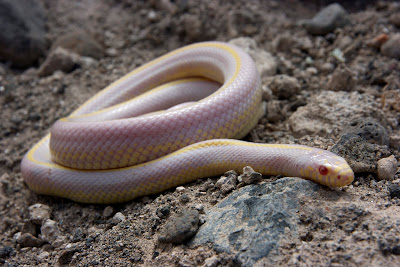
To find the first and only "original" remains of a snake in the Canary islands, in the Atlantic sea, we need to go back to the late Miocene, a geological epoch especially renowned for the repeated desiccations of the Mediterranean sea. Paleontologists have found just one vertebra of what was something like a boa living in the archipelago 5-10 million years ago. As far as we know, since then no snakes lived in the Canary islands, at least until the early 2000, when the archipelago has experienced the very unfortunate introduction of the California kingsnake (Lampropeltis californiae). This species, probably escaped or released from captive facilities, is now an important environmental problem in the archipelago due to the enormous social alarm among the population not accustomed to the presence of snakes, and the damage caused to many endemic reptile species, such as the Gran Canaria giant lizard (Gallotia stehlini). To remove this major ecological threat, over 1000 snakes were captured since 2007, and now thanks to the 1 million euro Lampropeltis project supported by the EU through the LIFE+ programme, the authorities expect to set up the conditions for the eradication of the species.


.California kingsnake (striped albino pattern) Photo © Ramón Gallo Barneto
California kingsnake (striped albino pattern). Photo © Ramón Gallo Barneto

The lucrative trade of species for pet amateurs carries the inherent risk of escape or abandonment of animals kept in captivity, and as a consequence the potential establishment of wild self-sustaining populations of a number of invasive alien species. In fact the California kingsnake is only one of the many species known to have succeeded in getting naturalized outside their native range as a side effect of the pet industry. Another major example among the snakes is the Burmese python (Python molurus bivittatus) in the Everglades, Florida. The spread of this species is a major concern in the region, because it is a predator that can grow over 5 metres long, and as such is able to eat nearly any native animal, possibly even panthers and alligators.

Snakes are often introduced also as cargo stowaway. In this way many species manage to colonise even remote oceanic islands, where they can represent a serious threat to some of the most and unique living creatures of the world. A renowned case of accidental introduction concerns the brown tree snake (Boiga irregularis). Soon after World War II this native of the Solomon islands, northern Australia and Papua New Guinea, was transported as stowaway by military cargos to the island of Guam, Mariana Islands. In this 
western Pacific island this ecologically disrupting predator is having a dramatic ecological and economic impact. In particular is negatively affecting several species beside having killed off at least 8 of the island’s 11 species of native birds, as well as some indigenous lizards and bats. Now there is a growing concern that the species could take advantage of the frequent aircraft flights from Guam to the Hawaii and make its way to this archipelago in central Pacific, where its ecological and economic impact would be even greater (according to some studies it might cost over 1.7 billion dollar per year if successfully introduced).


Brown Tree Snake. Photo © Daniel O'Brien

Accidental introductions linked to military activities are likely to have occurred also in ancient times: perhaps snakes were used to frighten enemies even during Roman assaults. As suggested for the origin of the viperine snake (Natrix maura) in the Balearic, Spain, some introduced populations of snakes in the Mediterranean islands could be actually linked to such battle related events. Also this snake is having a major ecological impact in terms of loss of indigenous species, and changes in community structures and function. In fact in the Balearic Islands, the introduced viperine snake is known to represent a serious threat for the endangered endemic Mallorcan midwife toad or ferreret (Alytes muletensis) in Mallorca, and was probably involved in the extinction of the species in Menorca.

Other than inflicting ecological harm, non-indigenous snakes can be dangerous to humans, as some species are also poisonous. A typical poisonous snake introduced outside its natural range is the habu (Trimeresurus flavoviridis), a Japanese native viperid introduced in Minnajima, Okinawa Island. Also the brown tree snakes is well known for its venomous bites: in Guam the estimated cost for hospitalisation and intensive care for people affected by snakebite (especially infants) is about 25,000 dollars per year. Along with the ecological damages and the health problems, the brown tree snake can also provoke significant economic impacts, like frequent power outages and damage to the electric lines due to the attitude to crawl along the wires: yearly cost for direct damages and lost productivity is conservatively estimated at 1 million dollars.


Thus, nothing to do with the notorious old rumor, still very popular in countries like Italy, according to which snakes, and particularly vipers, are recurringly broadcasted by helicopters - by either environmentalists or parks authorities - to restore their wild populations. Here the problem for nature conservation professionals is how to prevent the further release or spread of snakes and other harmful alien species outside their natural range, where they clearly represent a key driver of biodiversity loss.